
[[{“value”:”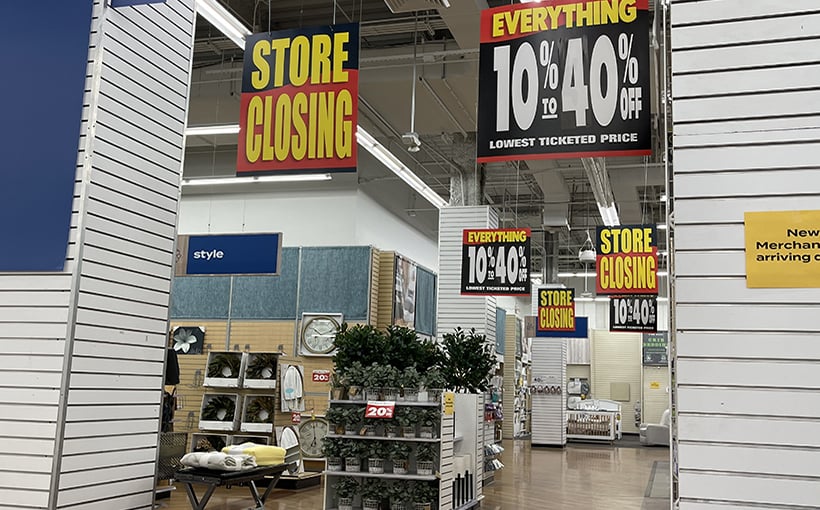
**Empty Big Boxes: Crisis or Opportunity?**
The past few years have been tough for many big-box retailers, with several major chains facing financial distress and store closures:
– JOANN filed for bankruptcy—again—in 2025.
– Big Lots declared bankruptcy in 2024, though a few stores remain open.
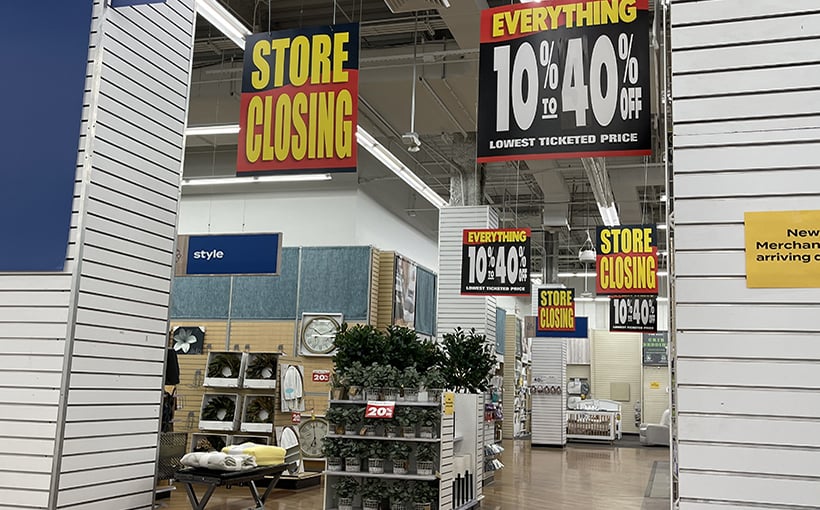
– Bed Bath & Beyond shuttered all physical locations in 2023, transitioning to an online-only model.
– At Home filed for bankruptcy in mid-2025 and began closing stores nationwide.
Despite the decline of some traditional retailers, the outlook isn’t entirely bleak. “Backfilling has been steady with off-price leading the charge. Burlington, Ross, and the TJX banners are taking much of this space and are still in expansion mode,” said Daniel Herrold, Senior Vice President of Investment Sales at Northmarq.
**Not All Boxes Created Equal**
Many of these troubled big-box retailers share similar traits: large store footprints, thin profit margins, and a reliance on middle-income consumers—many of whom have shifted their spending to value-oriented options.
Interestingly, the closure of these chains hasn’t dramatically affected the broader retail market. As of 2025, the national average vacancy rate remains relatively low, hovering between 4% and 5%.
Herrold noted that the real challenge lies in repositioning the more difficult properties, especially traditional department store spaces. Chains like Macy’s, Kohl’s, and JCPenney are all scaling back, leaving behind sizable and often outdated retail footprints. However, amid low levels of new retail construction and continued demand, well-located big-box spaces remain highly desirable.
**Investor Perspective: Hidden Value in Vacant Boxes**
For investors, empty big boxes may offer more opportunity than meets the eye—especially for those with redevelopment expertise. “Most of these assets come with no income because the tenant is already gone,” explained Herrold. “Even if a lease is still technically active, the property is dark and generating no revenue.”
In these scenarios, the investment appeal lies not in current cash flow but in the potential for transformation. “It’s about the dirt, the location, and what can be built or repurposed there,” Herrold emphasized. Often, attempting to lease the space or split it into smaller units may not be the best path; instead, the property’s future value depends on the broader redevelopment potential.
**Looking Ahead**
Even as discount giants like TJ Maxx, Burlington, and Ross continue filling some of these vacated boxes, many of these properties may ultimately be better suited for redevelopment.
However, Herrold cautioned that redevelopment isn’t for the faint of heart. It involves a rigorous process of feasibility studies, zoning changes, and securing city approvals. “Once those are done, it comes down to execution,” he said.
Importantly, success in these ventures typically comes to experienced investors who understand the complex bureaucracy surrounding redevelopment efforts. When done properly, Herrold noted, the result can be transformative—not just for the property itself, but for the surrounding community. “Done right, the process breathes new life into the entire property and gives it a stronger, long-term foundation,” he concluded.
— Reported by Connect CRE
“}]]
