
[[{“value”:”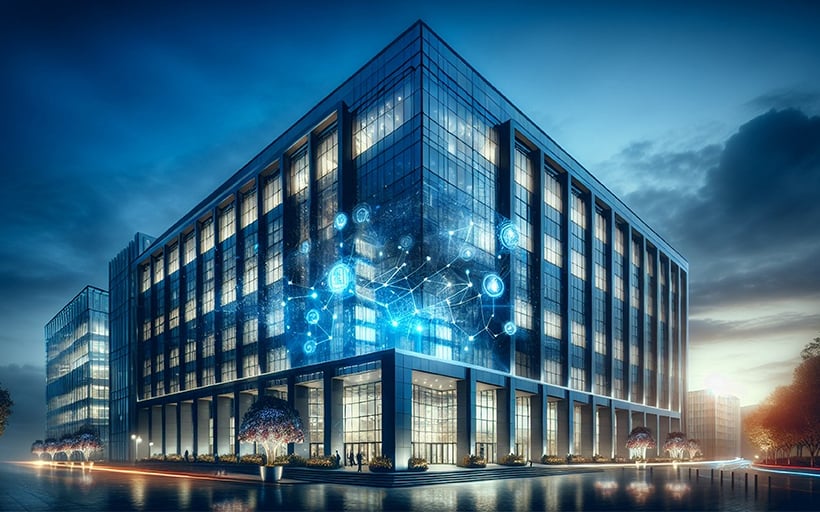
**A Potential New Use for Vacant Office Space: Data Centers**


*Richard Dennis*
Converting vacant office buildings into residential units or hotel spaces is not a new concept. In fact, since the onset of COVID-19, property owners have been exploring such adaptive reuse strategies to restore lost value in underutilized properties. Adaptive reuse itself has existed since the late 20th century, offering creative second lives for aging or obsolete structures.
But there’s a new twist in this trend that’s beginning to gain momentum: transforming empty office buildings into data centers.
Although not yet commonplace, this idea is emerging as technological demands—especially from artificial intelligence, cloud computing, and digital infrastructure—drive explosive growth in the need for data storage and processing facilities.
“The idea is fairly recent, following the increase in data center construction,” said Richard J. Dennis, Technical Director for Data Centers at Partner Engineering & Science. “This construction has been spurred by significant advancements in computer technology, improving accuracy and accelerating model execution.”
### The Benefits of Office-to-Data Center Conversions
At first glance, the main advantages of this adaptive reuse opportunity are:
– Offering a new lease on life for non-functioning, vacant office space.
– Supporting the vast expansion of technology sectors that are reliant on data infrastructure.

Digging deeper, these conversions can also significantly increase a property’s valuation. “A property converted to data center use is valued much higher than one repurposed for residential units,” Dennis explained.
A key benefit is occupancy. Data center facilities typically see near full occupancy due to high demand, making converted spaces low-risk in terms of finding tenants or users.
Further, a complete build-out isn’t always necessary to generate interest. In some cases, a strategic and well-researched feasibility assessment can be enough to increase the marketability of the property to another developer. For example, Partner ESI conducted an evaluation for a business park in Memphis, TN. The study showed the site had viable data center potential due to nearby fiber infrastructure and access to high-capacity power. Though conversion costs were estimated at 22% of the current property value, the projected value increase was nearly 400%.
### What to Consider Before Converting
While the potential upside is significant, not every office property makes a viable candidate for data center conversion. Key considerations include:

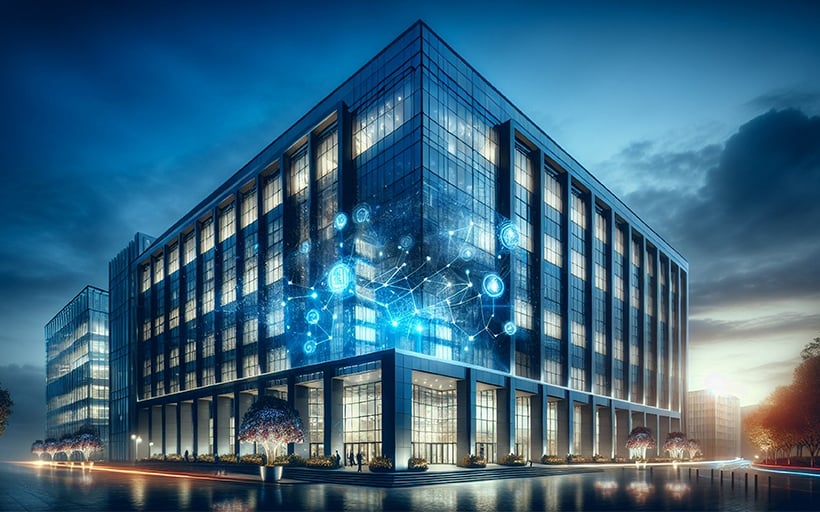
*Reimagining office space converted into a modern data center*
“There needs to be power and fiber infrastructure available to the site,” Dennis cautioned. “There must also be enough space to install electrical and cooling systems necessary for data center operations.” Many office buildings simply weren’t built with the mechanical requirements of data infrastructure in mind. As a result, substantial upgrades may be required.
Additional factors to evaluate:
– Local permit requirements (zoning, environmental, noise, etc.)
– Geographic risks and climate conditions
– Proximity to skilled labor, suppliers, and emergency services
– Scalability potential for future expansion
– Structural suitability (floor load capacity, layout, elevators, etc.)
The conversion timeline itself can also be lengthy. “It’s a slow process due to utility engagement, long equipment lead times, and limited industry personnel,” Dennis noted.
### The Way Forward
With the right combination of location, infrastructure, and planning, office-to-data center conversions can offer a viable and lucrative future for otherwise stranded office assets. But success doesn’t come without research.
A thorough feasibility study—like those conducted by Partner ESI—is critical in determining whether a property is well suited to this type of transformation. According to Dennis, this process should include “Go/No-Go” decision points, allowing owners or developers to halt development before sinking excessive time and resources into non-viable projects.
As adaptive reuse continues evolving, data center conversions represent a forward-looking approach that aligns well with the rapid growth in digital infrastructure and AI technologies.
Don’t miss exclusive insights into this emerging opportunity and more at the upcoming conference, “Connect North American Investment in Digital Infrastructure & AI,” scheduled for February 11, 2026, in Montreal.
“}]]
