
[[{“value”:”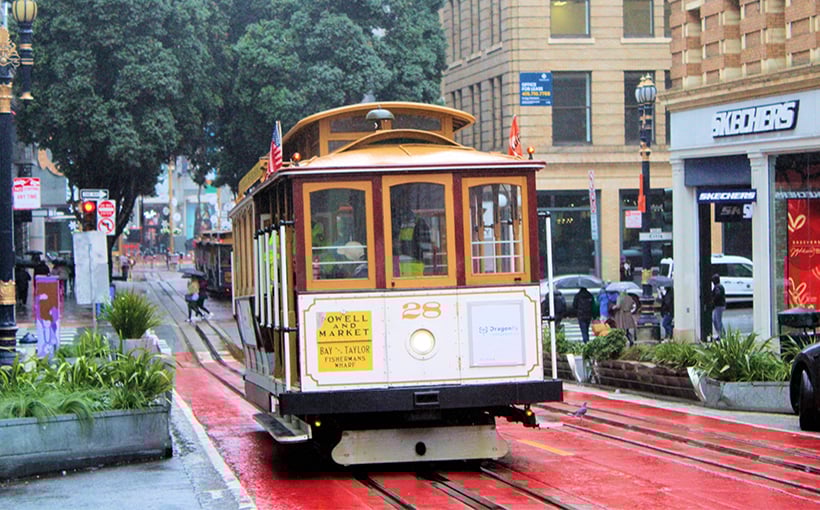
**Retail Faces Challenges Entering Prime Urban Corridors**
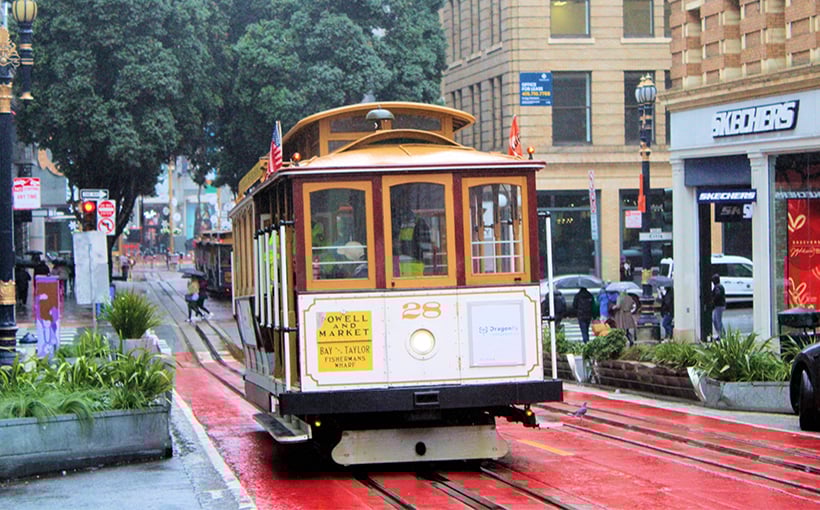
*Pictured: Union Square in San Francisco*
Competing for space along North America’s prime urban retail corridors is anything but easy. Rather than a calm negotiation, the process often takes on a winner-takes-all approach, especially for retailers and investors targeting these high-demand, limited-supply areas.
“Securing space on North America’s iconic shopping corridors remains a challenge, as vacancy rates on many prime stretches approach historic lows while asking rents soar,” according to JLL’s recent report, *Prime Urban Retail Corridors are Becoming Increasingly Competitive*.
To compile the report, JLL experts surveyed stakeholders across more than 40 major U.S. retail markets and three Canadian markets. They defined a prime urban corridor as “a nationally recognized shopping district distinguished by its mix of high-street, national, and international tenants,” with clearly delineated boundaries that contain the most coveted retail spaces.
One reason for declining availability along these corridors is the influx of impactful food-and-beverage concepts establishing flagship presences in premium locations. Another factor is the branding value—selecting a corridor is now as crucial for brand positioning as it is for the foot traffic.
Global luxury retailers are also increasingly investing in these areas, aiming to transform their physical spaces into immersive, experiential flagships. These capital commitments are designed to elevate the customer experience and deepen brand engagement.
With space becoming scarce, some retailers are opting to buy their way into these iconic districts. According to the report, high-street retail liquidity is at its highest level since 2015, and investments climbed 82% year-over-year in 2025. Notable deals include IKEA’s $213 million purchase of 529 Broadway in SoHo and ECA Limited’s $400 million sale of 338 North Rodeo Drive in Beverly Hills.
Cities, too, are playing a role in revitalizing these corridors. Examples include:
– **New York City**, currently undertaking a $400 million redevelopment of Fifth Avenue, stretching from Bryant Park to Central Park.
– **San Francisco’s Union Square**, which is undergoing an “ambitious, destination-focused recovery,” according to JLL.
– **Boston**, where a return to office work has sparked new retail openings to serve its robust professional community.
These developments highlight not only the challenges of entering ultra-competitive retail corridors but also the evolving strategies retailers and cities are deploying to adapt to a new era of experiential, high-stakes urban retail.
“}]]
