
[[{“value”:”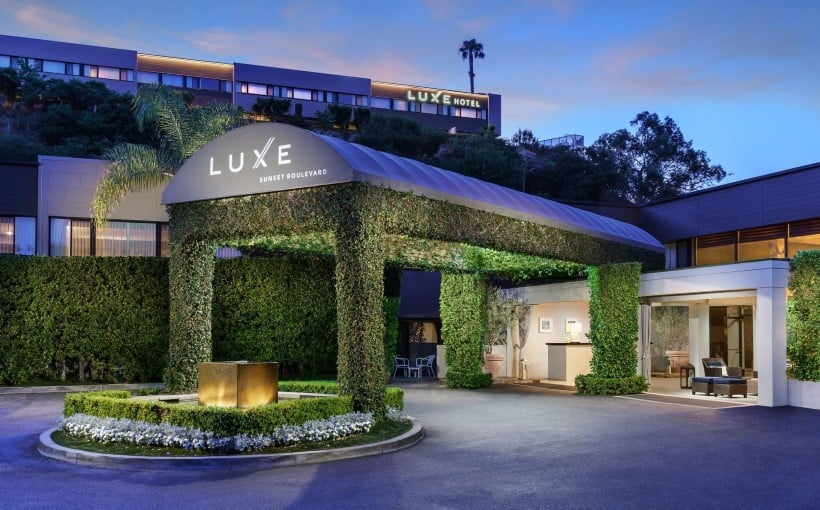
**Retail Leaders Say West Coast Market Rebounds as Supply Shrinks, Capital Returns**
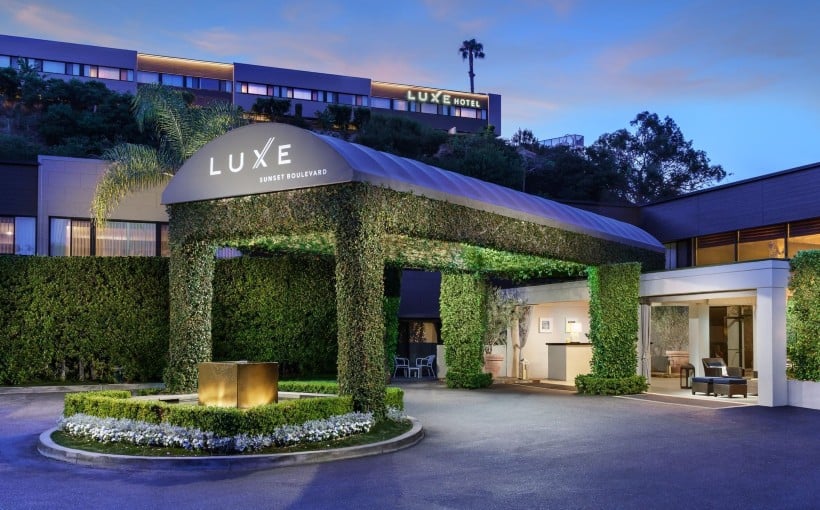
The state of the retail industry in Southern California’s commercial real estate market was front and center on Tuesday as a packed audience gathered at the Luxe Sunset Blvd. Hotel in Los Angeles for Connect Retail West 2025. Industry experts convened to discuss the current retail landscape and what lies ahead.
The event launched with the panel discussion “A View from the Top: Shaping Retail CRE on the West Coast,” moderated by Alex J. Caruso of Cox Castle. Participants included Jim Dillavou of Paragon Commercial Group, Joseph Miller of Runyon Group, Andrew Turf of Newmark, and Kevork Zoryan of Arselle Investments.
This influential group of retail developers, owners, and advisors delivered a consistent message: brick-and-mortar retail is not only recovering but is becoming increasingly favored by both consumers and investors after facing headwinds over the past decade.
The panel offered insights across various segments of retail, from boutique placemaking and institutional investment to grocery-anchored centers and high-street retail. Though their perspectives are nationally informed, the conversation was concentrated on Southern California — described by the panel as both a bellwether and a battleground for the future of U.S. retail.
Joseph Miller, co-founder of the Runyon Group, kicked things off by highlighting a shifting perception within the industry. “We specialize in what used to be very unpopular — small boutique properties with small boutique tenants,” said Miller. “We’ve been doing this for almost 20 years, and the demand for curated retail is stronger than ever.” Runyon has advised on developments including the master plan for Rockefeller Center and the Platform in Culver City.
From a capital markets standpoint, Kevork Zoryan of Arselle Investments pointed out a broader structural turnaround. Over 200 million square feet of retail space has been demolished nationwide in the past decade, while new development has remained limited. “The denominator is shrinking, but the consumer is actually spending more,” Zoryan noted, emphasizing retail’s strength despite assumptions about e-commerce dominance.
Jim Dillavou, co-founder of Paragon Commercial Group, attributed the renewed appetite for retail to supply-side constraints. “Everybody’s wondering how retail went from being the redheaded stepchild to being in favor so quickly,” he said. “The answer is simply supply. There is no more supply.” Dillavou highlighted grocery-anchored centers as reaching a state of “equilibrium,” with grocers successfully blending online ordering, delivery, and in-store experience. “This is ten years of data. We’ve hit the stabilization point,” he added.
Andrew Turf, a high-street retail broker formerly with CBRE, echoed those points while stressing continued resilience in top-tier cities. “It’s the same space Joey [Miller] and I both play in,” he said. “These markets — London, New York, Miami, Los Angeles — continue to prove their resilience.”
The consensus among panelists was that capital is beginning to flow back into the retail sector after a prolonged drought. While institutional investors once focused on A-class malls, with weaker B- and C-class malls underperforming, many are now rediscovering opportunities in grocery-anchored properties, neighborhood centers, and curated retail venues.
“Capital flows have been turned off for ten years,” said Dillavou. “Now they’re turning back on. Institutional allocators review their portfolios and realize they don’t have enough retail exposure. They can’t allocate more to the office. Industrial has slowed. Multifamily is mixed. Retail is where they’re looking.”
The panel also noted that rising construction costs will keep new development restrained. Without a significant lift in replacement rents, large-scale retail projects will be difficult to justify. Even so, panelists emphasized that demand is strong and consumer behavior is clearly trending back in favor of in-person retail experiences.
Moderator Alex J. Caruso concluded the discussion by noting: “Real estate is a backyard game. And in Southern California’s backyard, retail is very much alive.”
“}]]
