
[[{“value”:”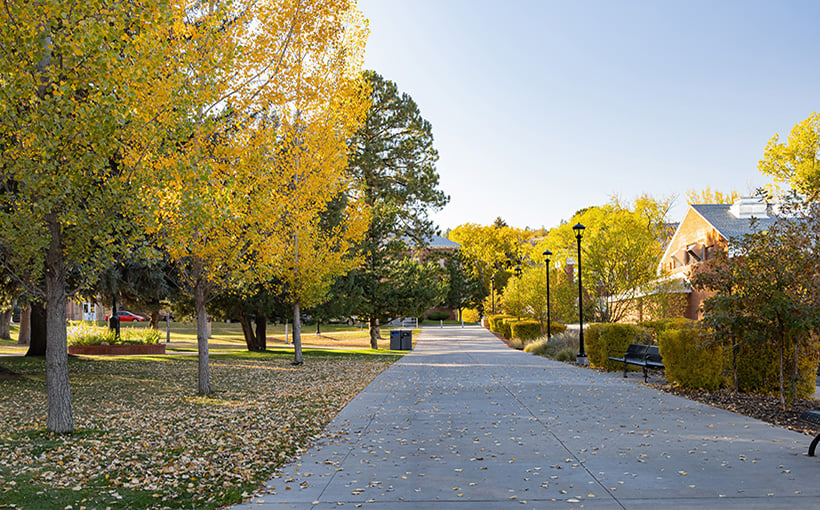
**Placemaking Goes to College: How Campus Spaces Are Evolving to Foster Belonging and Boost Enrollment**
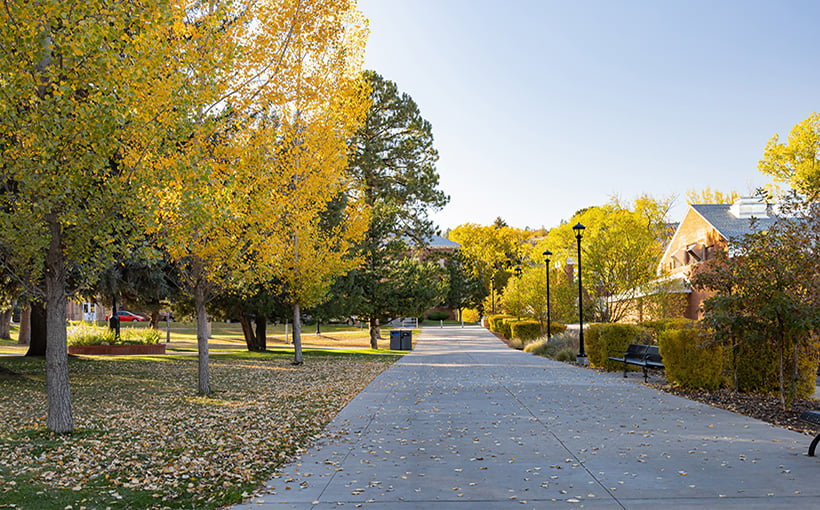
*Pictured above: Northern Arizona University*
The concept of placemaking, which first entered urban planning in the mid-20th century, is increasingly being embraced by colleges and universities. Placemaking strategies—once confined to improving city streets and public squares—are now being used to boost student well-being, promote campus engagement, and even influence enrollment.
David McCullough, Principal at McCullough Landscape Architects, shared his insights on how placemaking intersects with higher education design and planning, and why creating meaningful spaces matters more than ever for today’s students.
—
**Q: How does higher education campus placemaking differ from its urban counterpart?**
*David McCullough*
A: Typical placemaking strategies such as art installations, gathering spaces, mixed-use areas, multi-modal circulation, and non-invasive safety measures are common across both urban and campus settings. However, university placemaking is unique because students exist in a dual role: both as residents and temporary users. During this formative period in their lives, students are searching for identity, safety, and belonging—not just academic instruction. Effective campus placemaking directly shapes a student’s daily life and can play a pivotal role alongside academics in choosing where to attend college.
—
**Q: What factors have led to an increase in campus placemaking planning?**
A: The rise of social isolation due to technology, compounded by the COVID-19 pandemic, intensified the human desire for meaningful connection. Placemaking creates opportunities for social interaction and a dynamic sense of place, helping students feel part of a vibrant, energetic community. When students fail to find that sense of connection, they are more likely to reconsider their college choice. With national statistics showing that over one-third of college students transfer at least once, cultivating a sense of belonging is now essential to retain enrollment.
—
**Q: How does a sense of place impact student recruitment and retention?**
*University of California-Riverside*
A: Placemaking enhances a campus’s uniqueness, but it must also be inclusively designed. The sense that “this place is for me” needs to resonate with both first-time visitors and long-time residents. We’ve seen examples where students immediately connect with certain outdoor or communal spaces during campus visits and later form daily routines around them. This sense of connection fosters ownership, increases time spent on campus, and strengthens students’ commitment to stay and succeed.
—
**Q: How should colleges and universities develop and execute placemaking strategies?**
A: The success of any placemaking effort hinges on authenticity. Institutions should begin by taking stock of existing assets rather than attempting to recreate the campus environment from scratch. A design that highlights and builds on these existing features fosters stronger connections not only within the campus but also with the broader community. Mutually beneficial relationships between schools and neighborhoods—through shared public spaces, collaborative programming, and economic partnerships—can enrich student life while contributing to local economic vitality.
—
**Q: What are some mistakes to avoid?**
A: One common pitfall is ignoring local context. Starting anew without honoring what already exists—both physically and socially—can alienate users and dilute the community’s character. Another issue is treating placemaking as a theoretical exercise rather than focusing on how spaces are used every day. Institutions need to work with planning teams that understand local culture and student behavior. Also, administrators must view placemaking as a long-term strategy, not a one-off solution.
*Duke University Campus Gardens*
—
**Q: How do you see placemaking evolving on college and university campuses?**
A: Over the next decade, campuses will increasingly resemble urban, mixed-use environments where students can live, work, study, and socialize. Rather than feeling closed off or isolated, campuses will blend more seamlessly into the surrounding city. We’ll see a breakdown of physical and social boundaries—creating walkable, interconnected spaces that fulfill most day-to-day needs. This design evolution will reduce car dependence, foster real-world engagement, and help prepare students for life beyond graduation.
“}]]
