
[[{“value”:”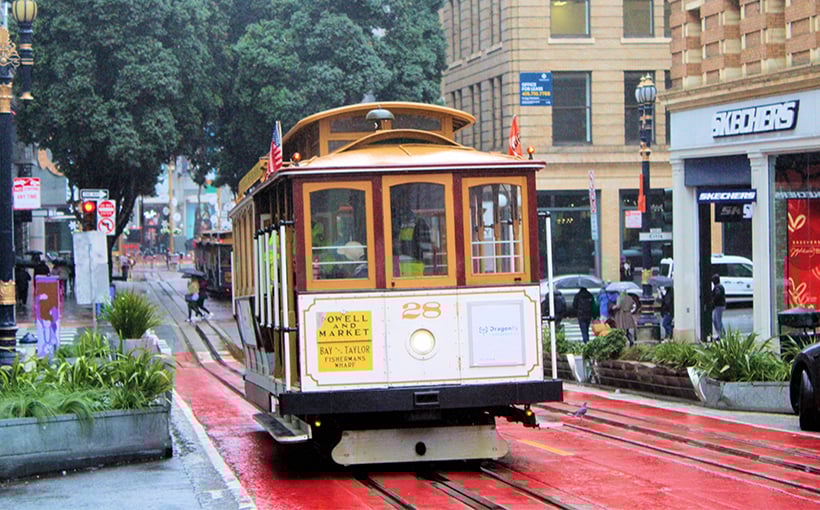
**Retail’s High-Stakes Competition for Prime Urban Corridor Space**
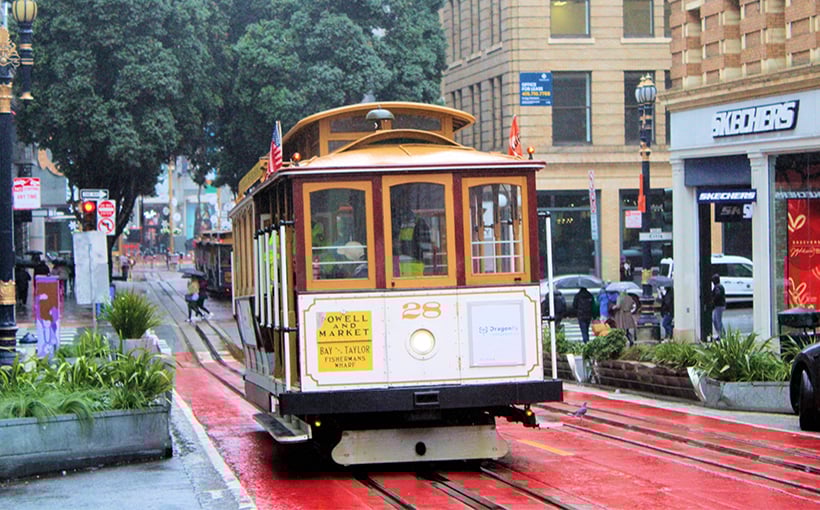
*Pictured: Union Square in San Francisco*
Securing retail space in North America’s premier urban shopping districts has become increasingly fierce. The competition is far from cordial—instead, it’s a high-stakes, winner-takes-all environment, particularly for retailers and investors eyeing the most iconic high-street locations.
According to JLL’s recent report, “Prime Urban Retail Corridors are Becoming Increasingly Competitive,” space in these corridors remains limited, with vacancy rates approaching historic lows and asking rents continuing to climb.
The report, which gathered insights from stakeholders across more than 40 U.S. cities and three Canadian cities, defines a prime urban corridor as a nationally recognized shopping district. These areas are distinguished by a curated tenant mix of high-street, national, and international brands, with carefully delineated zones that house the most prominent retail spaces.
One factor contributing to the scarcity of space is the strategic placement of high-impact food and beverage anchors. These establishments often select key retail locations as a statement of brand legitimacy and visibility. In fact, JLL notes that where a brand is seen is becoming just as critical as how many people walk by.
At the same time, global luxury brands are investing heavily in these corridors, transforming traditional retail footprints into immersive, large-format experiential spaces designed to enhance both visibility and customer engagement.
To overcome the hurdle of limited space, some retailers are taking ownership. High-street retail liquidity has reached its highest level since 2015, with investment up 82% year-over-year in 2025. Notable transactions include IKEA’s $213 million purchase of 529 Broadway in SoHo and ECA Limited’s $400 million sale of 338 North Rodeo Drive in Beverly Hills.
Municipal efforts are also underway to boost the vitality of these prime corridors:
– In New York City, a $400 million redevelopment is transforming Fifth Avenue between Bryant Park and Central Park.
– San Francisco’s Union Square is undergoing what JLL describes as an “ambitious, destination-focused recovery.”
– Boston’s retail sector is benefiting from the city’s strong back-to-office trends, drawing retailers to serve its established industries.
As these coveted urban corridors become increasingly central to brand identity and consumer engagement, competition for space is expected to remain intense—and only the most strategic players will succeed in securing a foothold.
“}]]
